


Budrys in Brussels: Diversification and economic security are at the heart of EU trade policy
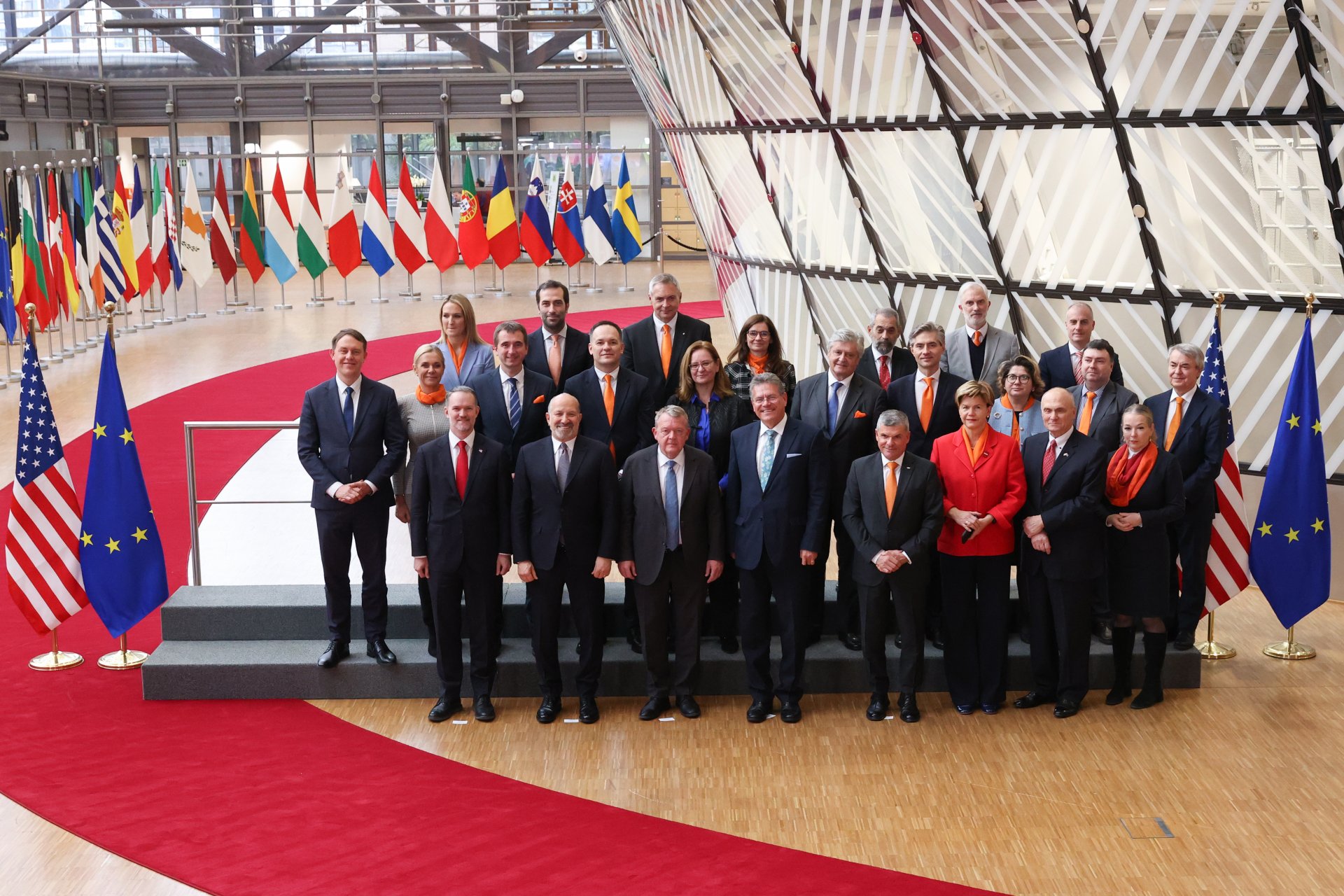
On November 24, Minister of Foreign Affairs Kęstutis Budrys attended the European Union's Foreign Affairs Council (Trade) meeting in Brussels. EU foreign and trade ministers reviewed the EU’s ongoing trade negotiations, including EU-China and EU-U.S. trade relations, as well as the strengthening of Europe's economic security and key issues in trade policy implementation.
During the discussion on the progress across the EU’s network of ongoing bilateral trade negotiations, Minister Budrys stressed that in the face of geopolitical challenges, the EU must accelerate the diversification of trade relations and strive for ambitious trade agreements.
“We must strengthen cooperation with India, the Southeast Asia region, and other partners. Updating the DCFTA agreement with Ukraine is a crucial step, while further expanding tariffs on Russia and Belarus is an essential measure to maintain pressure on the aggressors,” said the Minister.
As regards the EU-China trade relations, the Minister highlighted China’s export controls on rare earth elements and their impact on the EU’s economic security.
"China's industrial policy is focused on technological dominance, and it uses export controls as an instrument of economic pressure. The EU must act decisively by accelerating the diversification of supply chains, strengthening coordination with like-minded partners, and ensuring the effective application of economic security measures. It is also necessary to address the sanitary and phytosanitary restrictions that still apply to Lithuania," the Minister noted.
Regarding trade relations with the U.S., Minister Budrys expressed support for the EU-U.S. framework trade agreement and stressed the need to ensure its smooth implementation.
“We need to push the U.S. to expand tariff exemptions for strategically important products and find a long-term solution for steel and aluminium tariffs. A strong transatlantic partnership remains a cornerstone of Europe’s economic security,” he said.
In the Council meeting, Lithuania also informed about the ongoing Belarusian hybrid attacks and called on the EU institutions and member states to clearly identify these actions as a hybrid attack. Lithuania called for additional restrictive measures and a principled European response to Belarus' continued actions.
Social media


