


Budrys discusses security and humanitarian situation in Gaza and the West Bank
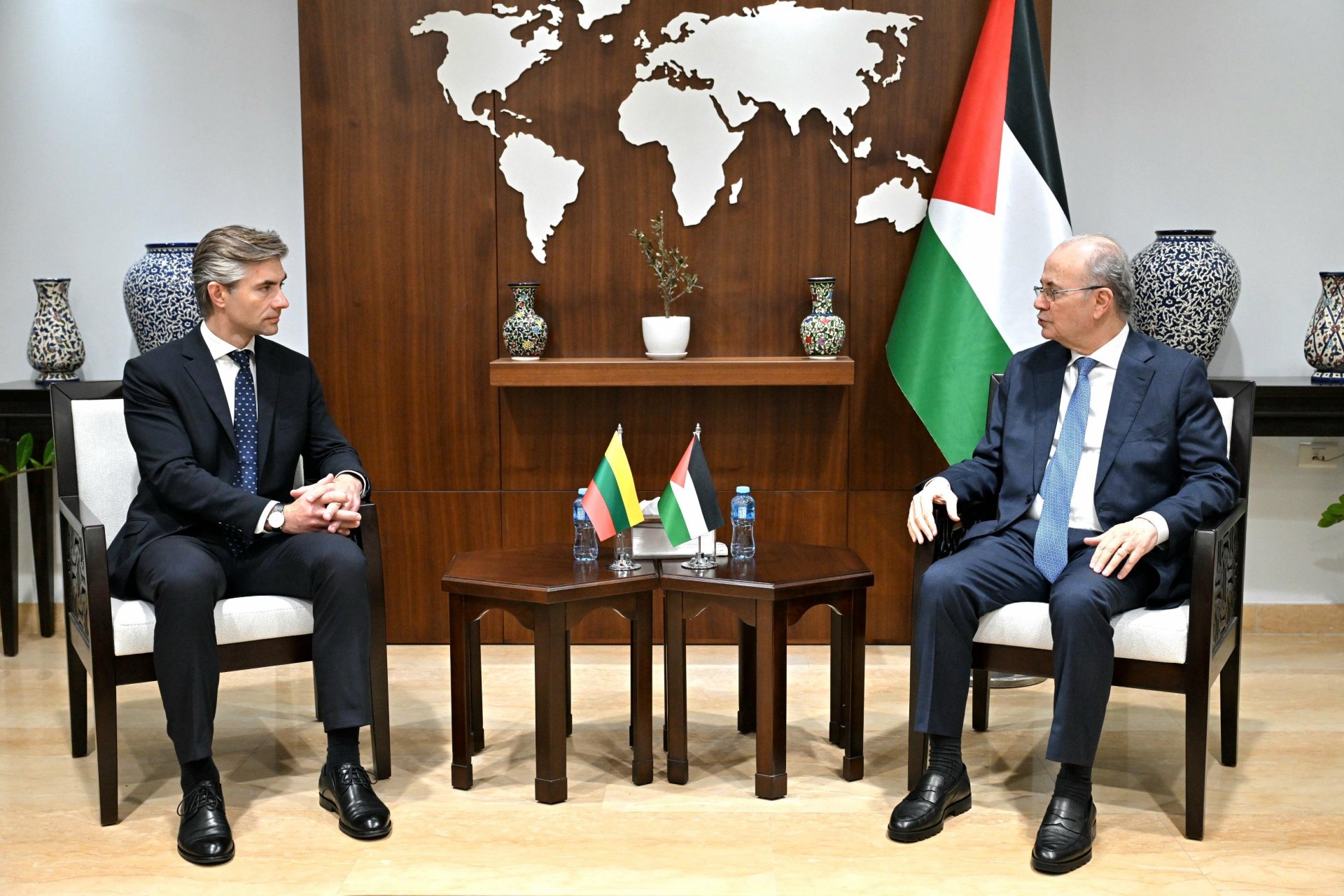
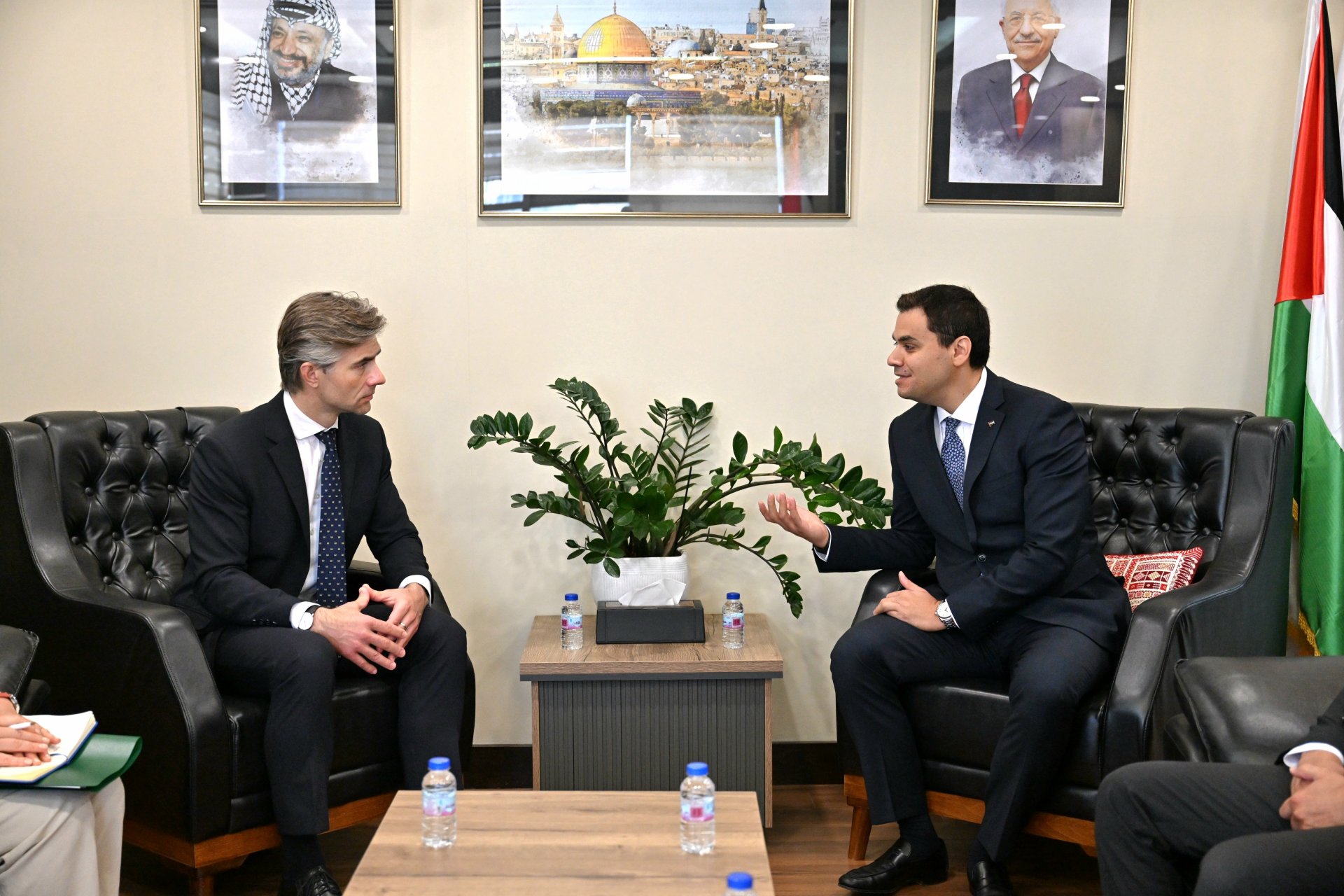
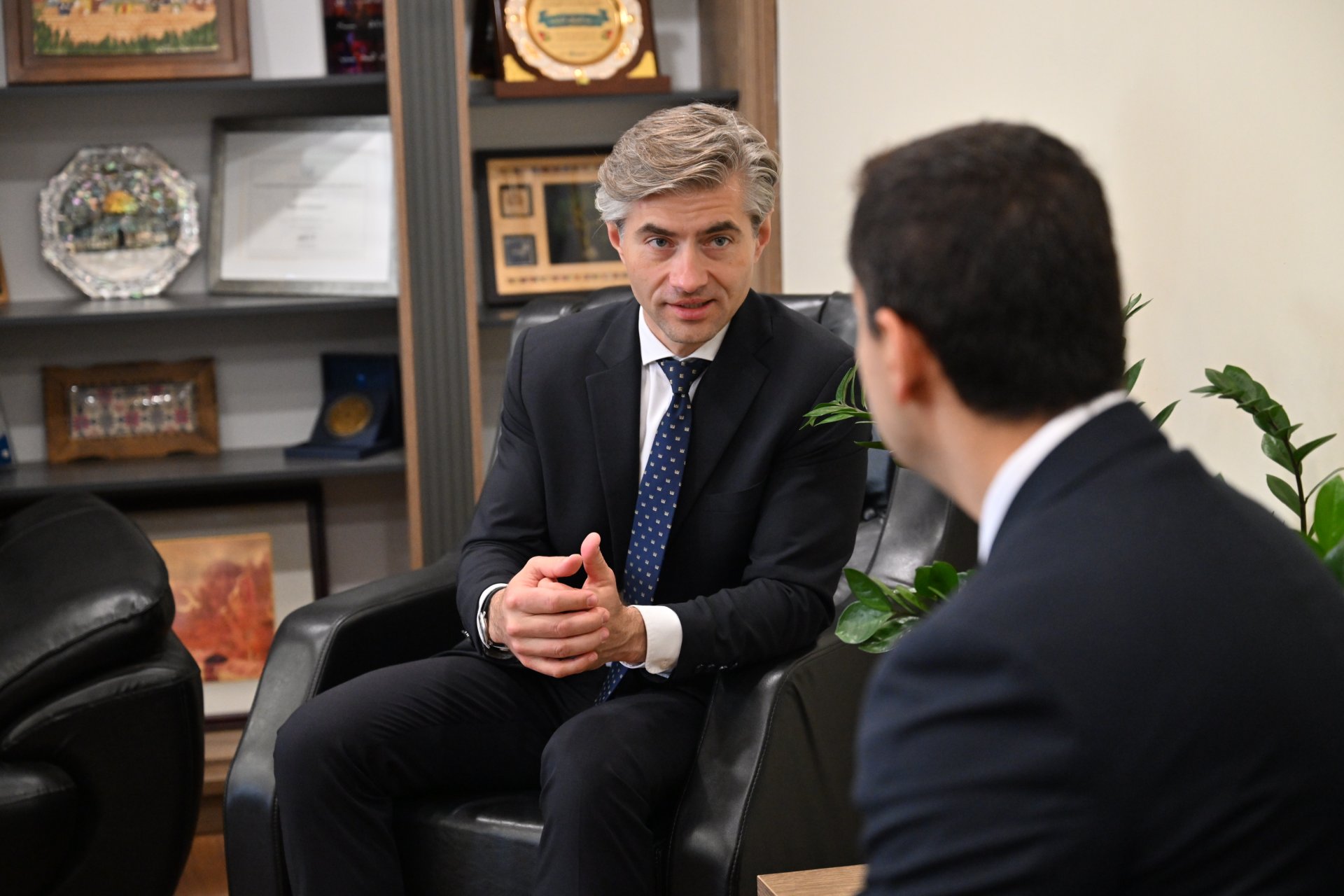
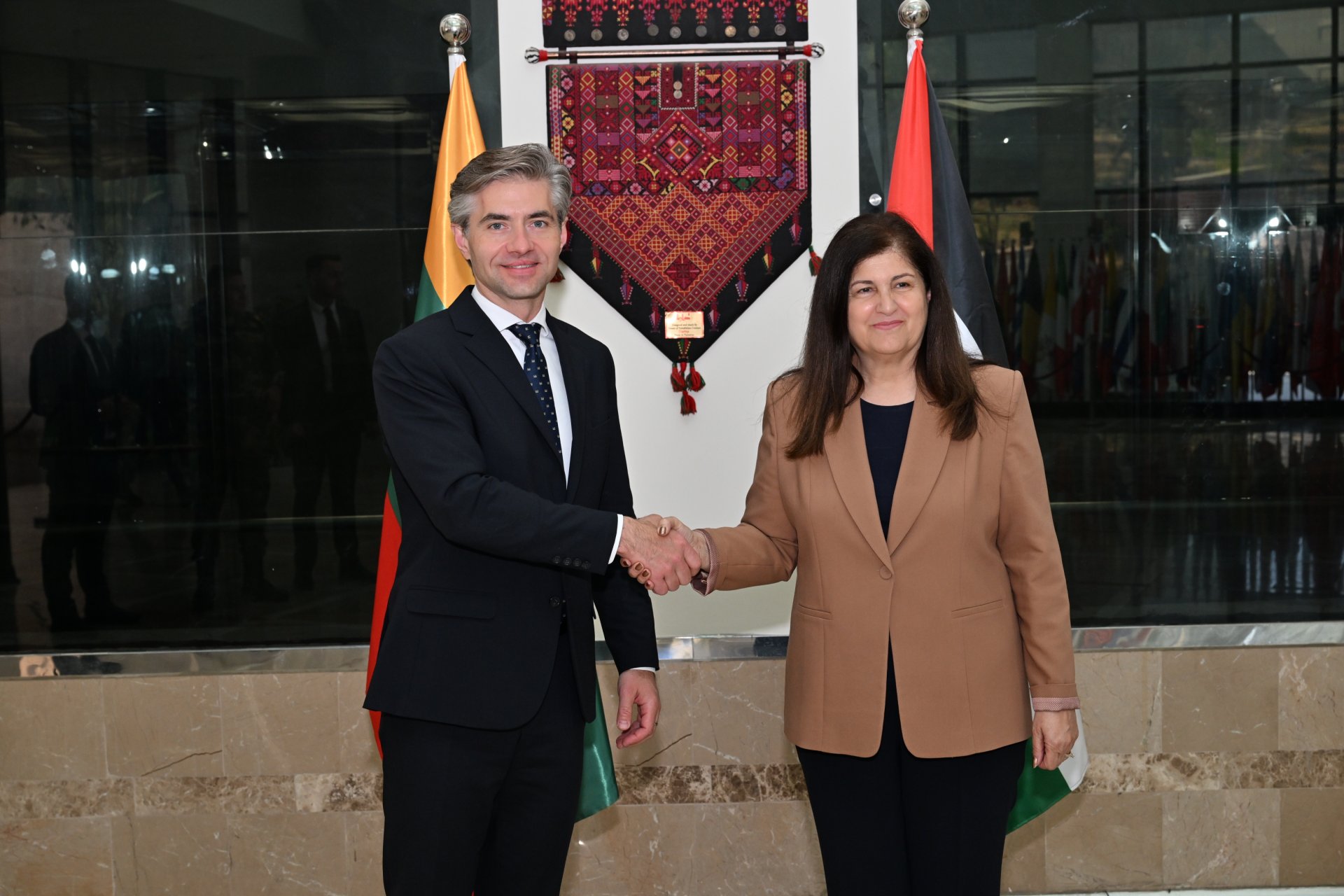
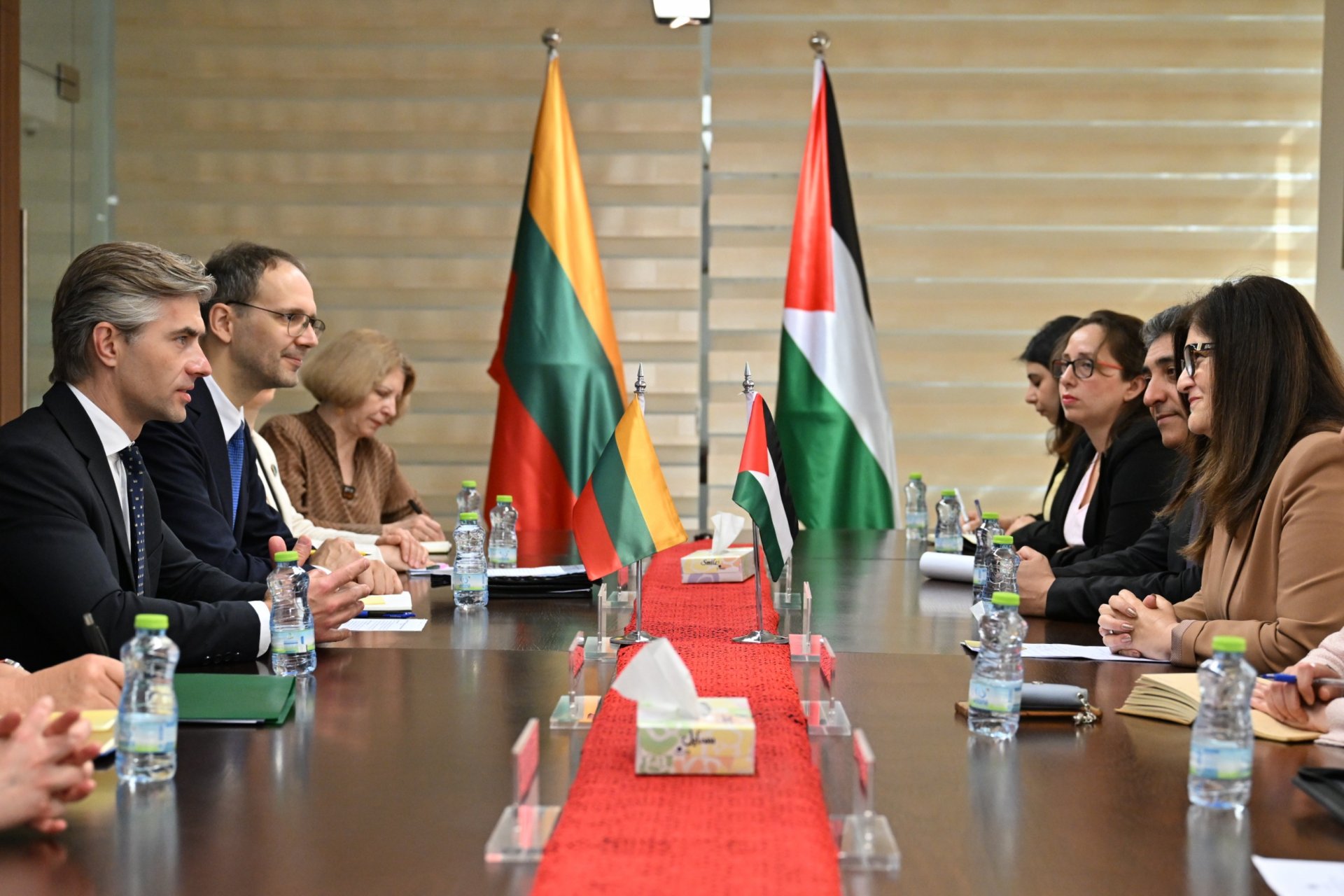
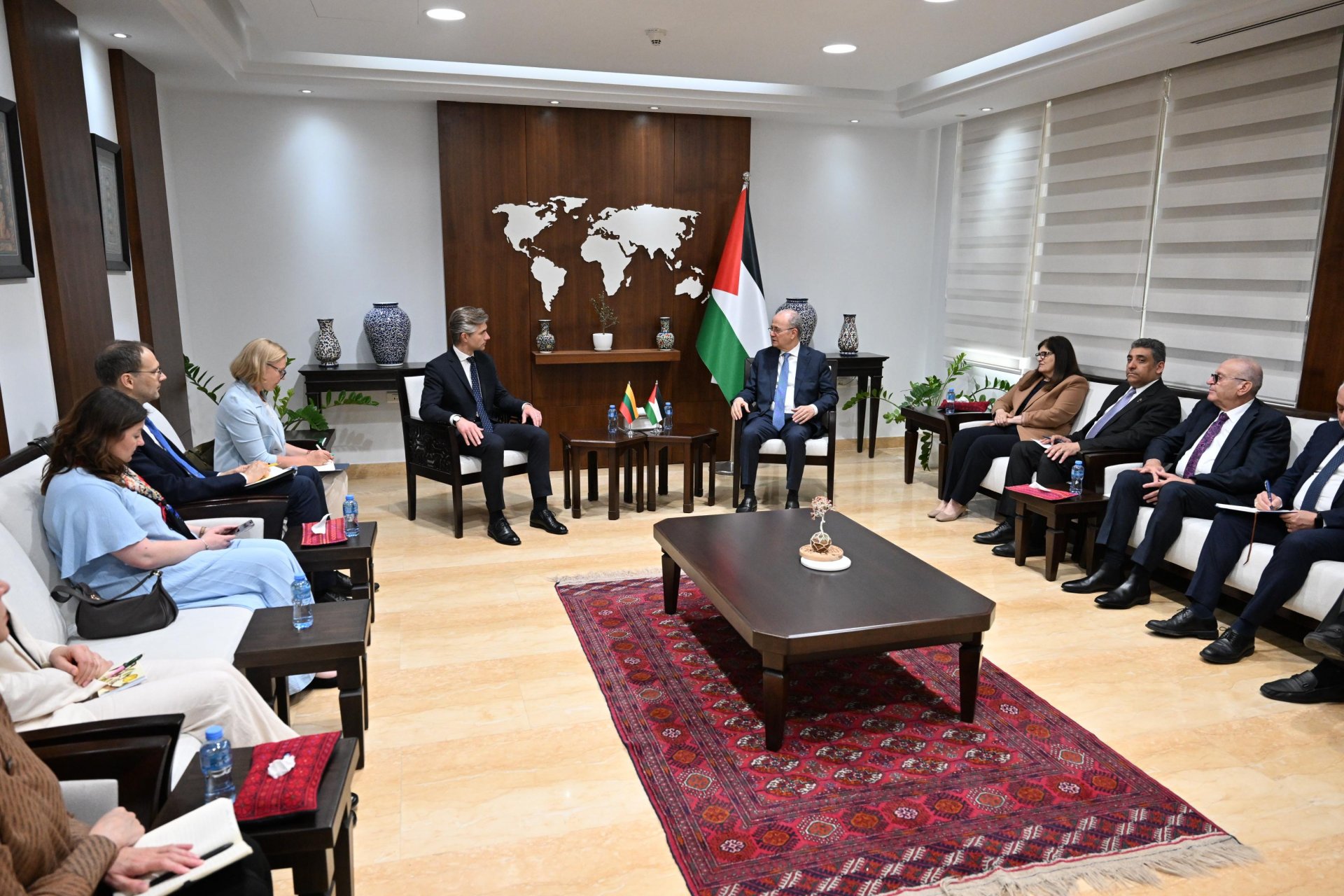
On 16 June in Ramallah, the Minister of Foreign Affairs of Lithuania, Kęstutis Budrys, met with Palestinian Prime Minister Mohammad Mustafa, the Minister of Foreign Affairs and Expatriates, Varsen Aghabekian Shahin, and the Minister of Communications and Digital Economy, Abdul Razzaq Al-Natsheh. The visit discussed the security and humanitarian situation in Gaza and the West Bank, regional political processes, and Lithuania's support for Palestine’s digital transformation.
During the discussion on the situation in Gaza, the Minister emphasized Lithuania's support for the full implementation of the Gaza peace plan. Budrys expressed hope that the second phase of the peace plan would commence as soon as possible, stressing the need to disarm Hamas and ensure that the organization does not participate in governing Gaza. The Minister also expressed serious concerns over settler violence and the establishment of illegal settlements in the West Bank, noting Lithuania's support for new EU sanctions targeting individuals and organizations that are involved in these actions.
"We call for full and unhindered humanitarian access to all parts of the Gaza Strip, respect for international humanitarian law, and for a sustainable ceasefire agreement and a two-state solution," he said.
During the visit, Lithuania reaffirmed its commitment to provide humanitarian assistance to the region. Lithuania consistently supports international organisations, including UNICEF, UNHCR, IOM, the World Food Programme, and the Red Cross, and allocated an additional €50,000 in humanitarian assistance to scale up World Food Programme (WFP) and operations in Gaza in 2026. The Minister stressed that assistance must be targeted and transparent to ensure it reaches the most vulnerable groups.
The meetings focused on Palestinian institutional reforms. The Minister welcomed the efforts of the Palestinian Authority in drafting a new transitional constitution, conducting municipal elections, and implementing a National Development and Reform Programme.
Budrys highlighted Lithuania’s active participation in the EU Twinning initiatives in Palestine, with three projects in the areas of statistics, environment, and border management implemented between 2019 and 2026, and an upcoming project in the area of civil protection. Since 2009, Lithuania has implemented 21 bilateral development cooperation projects in Palestine aimed at strengthening democracy, non-formal education, developing digital skills, empowering women, and promoting entrepreneurship.
The Minister also noted that Lithuania's experience in reconstruction and development projects, together with the EU and other donor funding, could lay the foundation for new partnerships in Palestine, especially in areas such as demining, education, solar energy, information technology, and environmental protection.
Social media


