


Budrys at the EU Foreign Affairs Council: the need to support Ukraine does not diminish as winter approaches
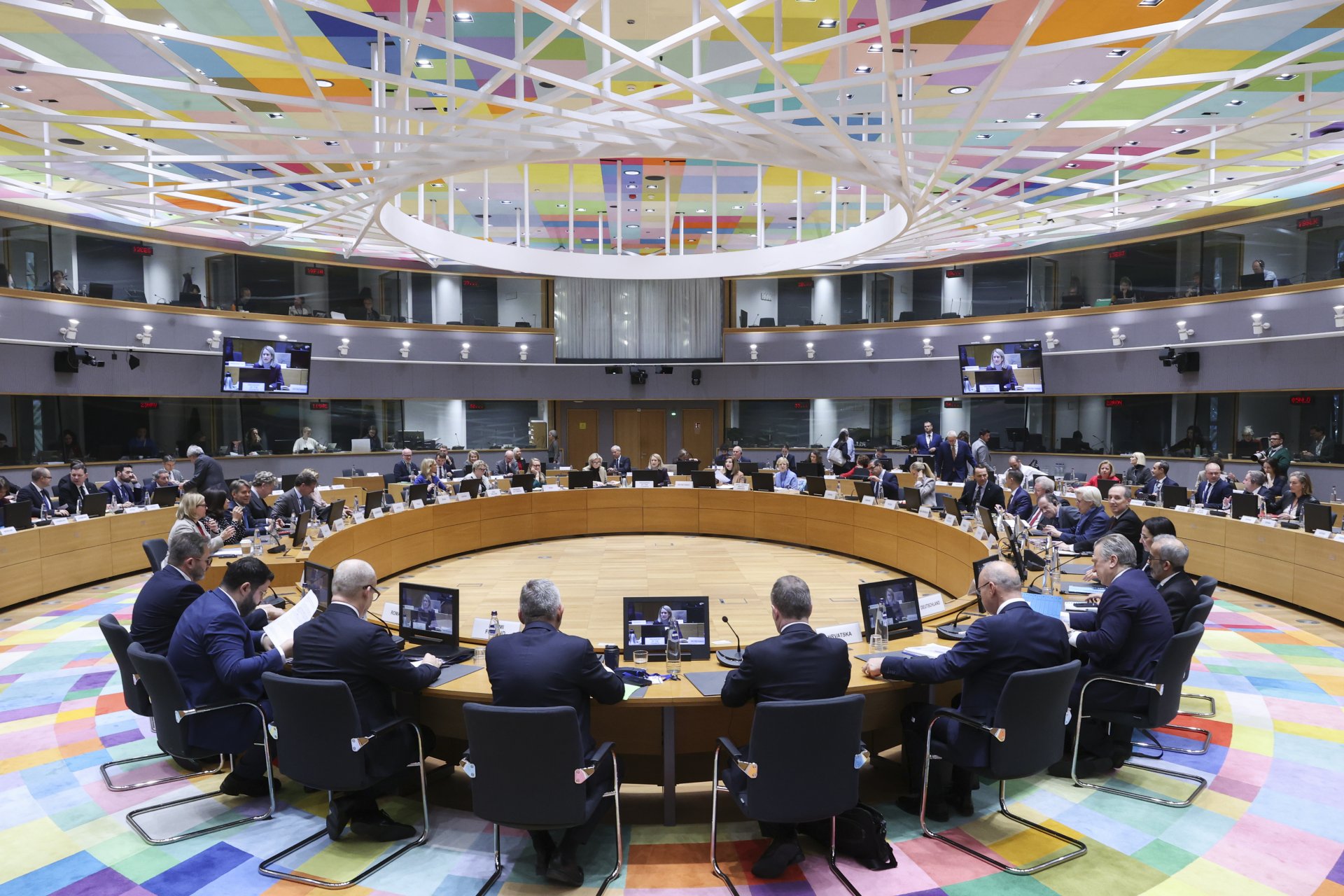
On 16 November, Minister of Foreign Affairs Kęstutis Budrys attended a meeting of the European Union (EU) Foreign Affairs Council (FAC), where he and ministers from the other 26 EU Member States discussed EU support for Ukraine, the situation in the Middle East and EU relations with Syria. During the meeting, new sanctions targeting 117 entities in Russia’s energy and financial sectors were approved.
One of the key issues discussed at the meeting was the peace talks held in Abu Dhabi last week. Lithuania’s Foreign Minister stressed that an unconditional ceasefire and credible, long-term security guarantees for Ukraine must be fundamental conditions of any peace agreement.
“We must pursue a ceasefire as an essential prerequisite for the peace process, and all decisions concerning peace in Ukraine must be taken together with Ukraine. In the negotiations, Europe must speak with one voice, based on a clear mandate agreed by the Member States,” Budrys said.
Budrys also stressed that there is no need to renegotiate Europe’s security architecture.
“We must not fall into Russia’s trap or give in to its attempts to redraw Europe’s security architecture. The existing system, based on the Charter of the United Nations, the Helsinki Final Act, the Charter of Paris and other international commitments, is sufficient. Russia can only be deterred through the consistent strengthening of European defence, greater resilience to hybrid threats and steadfast support for Ukraine, not through new declarations or additional political documents,” Minister Budrys said.
Budrys called on EU Member States and institutions to urgently increase military and financial support for Ukraine, explore ways of using frozen Russian assets for Ukraine’s defence, and step up support for the protection and reconstruction of Ukraine’s energy and transport infrastructure as winter approaches.
“Diplomatic contacts must not distract us from Ukraine’s immense needs as it prepares for winter or from Russia’s continuing attacks against civilians and civilian infrastructure. As long as Russia continues its aggression and fails to honour its commitments, there can be no question of normalising relations, easing sanctions or returning to business as usual,” Budrys said.
The Foreign Affairs Council also approved new sanctions against Russia. The measures target 117 entities in Russia’s financial and energy sectors. Additional restrictions were also imposed on exports of dual-use goods and advanced technologies, while restrictive measures were adopted against entities responsible for cyber and hybrid attacks.
In discussing the situation in the Middle East, ministers focused primarily on Syria. Following the fall of Bashar al-Assad’s regime, the EU is seeking to contribute to the country’s stabilisation and strengthen cooperation with Syria’s new authorities.
“The European Union is actively supporting Syria’s recovery. However, a new chapter in EU-Syria relations must be based on clear principles: Russia’s influence in the country must be reduced, and accountability must be ensured for the crimes committed by Bashar al-Assad’s regime,” Lithuania’s Foreign Minister said.
Social media


