


AT THE OSCE MINISTERIAL COUNCIL IN DUBLIN, LITHUANIAN FOREIGN VICE-MINISTER STRESSES THE ORGANIZATION’S ROLE IN PROMOTING PEACEFUL CONFLICT RESOLUTION
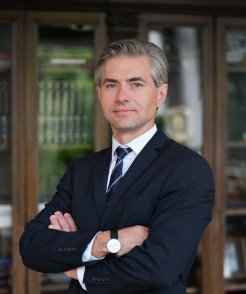
Lithuanian Vice-Minister of Foreign Affairs Evaldas Ignatavičius represented Lithuania at the 19th Meeting of the OSCE Ministerial Council held in Dublin on 6 and 7 December.
The Vice-Minister chaired one of the plenary sessions, participated in the OSCE Troika meetings with the Asian and Mediterranean Partners for Co-operation.
At the 19th Meeting of the OSCE Ministerial, Ministers of the 57 OSCE participating States acknowledged progress in finding a solution to resolve the protracted conflict in Moldova. Ignatavičius welcomed the progress that was achieved in the negotiations on Transnistria conflict settlement in the 5+2 format. He also emphasized the efforts of the current Irish Chair to build on what was achieved last year, when Lithuania held the Chairmanship of the organization.
“The OSCE’s role in promoting a peaceful resolution of the Transnistria conflict remains important. I hope that the 2013 Chairmanship of Ukraine will continue the existing work,” Ignatavičius said.
He also regretted that no tangible progress was reached in resolving the conflicts in Georgia and Nagorno-Karabakh.
The OSCE Ministerial Council failed to take any decisions on the enhancement of the organization’s work in the human rights field, arms control, confidence-building and ensuring safety in the military sphere. However, the OSCE Ministers were able to agree on the organization’s future model of work: the Ministers agreed on the ‘Helsinki +40’ road map for OSCE, which aims to develop the vision of a security community and to more effectively address security challenges within the OSCE region.
The Vice-Minister said, “We would like to thank our Irish associates for their professional work chairing this organization and preserving the most important values that unite us. However, we must acknowledge with disappointment that despite the enormous efforts of the OSCE Chair, we have failed to take very important decisions aimed at protecting the freedom of the media, building the safety of journalists, and guaranteeing the right of citizens to peacefully demonstrate and assemble. Great concerns are raised by the fact that these decisions were opposed by the countries that have recently often limited human rights and freedoms of their citizens.”
Ignatavičius also participated in bilateral meetings with Foreign Ministers of Andorra, Liechtenstein, Montenegro, the OSCE’s newest member, Mongolia, and Serbia, the heads of the delegations of Armenia, San Marino, Tunis and Turkmenistan, as well as with the OSCE High Commissioner on National Minorities Knut Vollebaek and Tibor Toth, Executive Secretary of the Preparatory Commission for the Comprehensive Nuclear-Test-Ban Treaty Organization.
This year, Lithuania, as member of the OSCE Troika, chaired the Contact Group with the Asian Partners for Co-operation. When speaking at the meeting of the OSCE Troika with the Asian Partners for Co-operation, the Vice-Minister presented the results of Lithuania’s 2012 Chairmanship of the OSCE Contact Group, laying particular emphasis on the decisions taken at the OSCE Ministerial Council in Vilnius last year with regard to the implementation of the OSCE partnerships and cooperation projects in Afghanistan.
The OSCE has 57 participating States. Last year, Lithuania held the Chairmanship of this organization.
Social media


