


AGREEMENT ON A REINFORCED ECONOMIC UNION WILL ENABLE EU MEMBER STATES TO MAINATAIN FISCAL DISCIPLINE, LITHUANIAN FOREIGN MINISTER SAYS
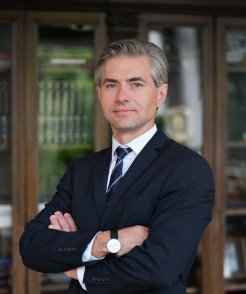
The Treaty on Stability Coordination and Governance in Economic and Monetary Union has to become a significant instrument, which would help European countries overcome current crisis of the Eurozone, to restore confidence in the markets and to avoid recessions in a long-term perspective, says Lithuanian Minister of Foreign Affairs Audronius Ažubalis.
On 24 February, the Minister participated in the discussion of the “Eurozone Crisis and a Deeper Integration of the European Union’s Economic Policy: Consequences for Lithuania” at the Lithuanian Ministry of Foreign Affairs.At the event, participants discussed the significance to Lithuania and to other European countries of the signing of the agreement on a reinforced economic union, which obliges member states to adhere to strict fiscal discipline and provides possibilities for closer adjustment and coordination of economic reforms.
“First of all, we interpret the agreement on a reinforced economic union as a strong commitment by all EU countries, including Lithuania, to adhere to strict fiscal discipline,” Ažubalis said.
He also called on participants to allay fears of different level of engagement of member states into this process.
“In the history of the European integration there are many encouraging examples, such as the signing of the Schengen Agreement. After all, at first this agreement was signed by individual countries and only later it was incorporated into the mainstream of EU law,” Ažubalis said.
When speaking about the future of the European Union, the Minister stressed that Lithuania was consistently speaking up for free and deeper integrated internal market, the right to freedom to provide services and reduced administrative burdens on businesses.
The discussion was also attended by politicians, economists, representatives from the academic community and from various public institutions.
This event is part of the series of public discussions organised by the Lithuanian Ministry of Foreign Affairs on important issues of Lithuania’s foreign policy and on the issues on the European agenda.
Social media


