AFGHAN 'JIRGA' IN QUEST FOR PEACE (Agence France-Presse, 1 June 2010)
KABUL, June 1, 2010 (AFP) - President Hamid Karzai will Wednesday gather up to 1,600 leaders from across Afghanistan, seeking a national consensus on how to end nearly nine years of war and ultimately allow US-led troops to withdraw. The three-day "peace jirga" in a huge air-conditioned tent will be the third such conference uniting Afghanistan's complex mix of ethnic, tribal, religious, geographic and gender interests since the Taliban were toppled in 2001. Protected against possible attack by 12,000 security forces personnel, the delegates in Kabul will be invited to come up with ideas on ending the insurgency, advising Karzai on how to pursue peace and with whom. "The goal of the jirga is to seek ways for a lasting peace in Afghanistan," said Mohammad Zahir Faiz-zada, who heads the delegation at the jirga from the relatively peaceful western province of Herat. "The Taliban who have roots in foreign countries and ideologies will never want to make peace, but those Afghan Taliban who fight for one or other reason, they will definitely want to make peace," he told AFP. Taliban leaders will not be turned away, organisers say, but have not been formally invited. The militants say they will not hold peace talks until foreign troops leave Afghanistan. Karzai's Western allies, led by the United States, have expressed support for the jirga as a milestone in Afghanistan's political maturity. With Western public appetite souring for a war that has killed almost 1,800 foreign troops and shows no sign of abating, they would like to see progress before an international conference set for late July in Kabul.
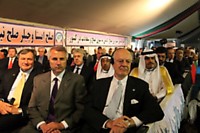
"It is important for the Afghan and Western audiences that there is something taking place," said Vygaudas Usackas, the European Union's ambassador to Afghanistan. "Once a consensus has been achieved, they expect to see progress in the shape of consistent and concrete action by the Afghan government this year. "Successful negotiations by the time of the Kabul conference are unlikely, but a properly consulted and actionable plan for negotiations before then would be a good result." The number of US and NATO troops will peak at 150,000 by August as part of a strategy designed to reverse Taliban momentum and boost government authority in southern Kandahar and Helmand provinces. Although US President Barack Obama has ordered more than 50,000 extra troops to Afghanistan since taking office, he has said he wants to start drawing down from mid-2011. The jirga will open with a Koran recitation and a speech by Karzai setting out his vision for what he hopes the meeting will achieve -- a national consensus that will lend legitimacy to his plans for ending the war. After the election of a chairman and two deputies, the delegates, who include 300 women, will be divided into 28 groups, each of which will have a spokesman who will present their ideas to the general forum. The jirga is expected to end on Friday with a declaration on what steps should be taken to end the insurgency, what groups should be included in the process and how they should be approached.
Karzai supports a reconciliation process, bankrolled by the international community, that aims to find jobs for men who fight for the Taliban because they need the money, rather than for ideological reasons. Organisers said no consensus will compromise progress made on human and women's rights and will respect the Afghan constitution, but hopes for overall success at the jirga are mixed. Usackas noted the international community and the Taliban want the same thing. "The Taliban’s pushing for the withdrawal of foreign troops as a starting point is not realistic. The international community do not want to have a permanent military presence in Afghanistan. "But the questions are (withdrawal) under what circumstances, and leaving behind what kind of platform?" he said.
The role of Afghanistan's neighbours -- particularly Iran and Pakistan -- is considered important to the success of any peace talks. The jirga will "set limits for negotiations with the Taliban", said commentator Waheed Mujda, a former official in the Taliban's 1996-2001 administration. "I think that can be achieved (but) there are issues which cannot be discussed, such as the withdrawal of foreign forces. "This jirga will play more of a role in announcing a general amnesty and pardon for the Taliban, which would mean that the Taliban leadership will also be pardoned -- not something the West would be comfortable with."
By Lynne O'Donnell (AFP)

Social media