A LABOR SHORTAGE SOLUTION (The Baltic Times, January 17-23, 2008, No.10, p. 14)
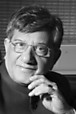
Q&A: Rajinder Chaudhary, Honorary Consul of India in Lithuania The Baltic states' very first Honorary Consul for India is Rajinder Chaudhary, already a well-known personality in the expat community in Lithuania for over over 10 years as the founder of the Sue's Indian Raja chain of restaurants. A retired wing commander in the Indian Air Force, he is now busy arranging a consulate office in Vilnius that opens this week at Basanaviciaus Street 7 in the Old Town. His plans include facilitating business travel between the two countries, especially now that the Baltic states have acceded to the Schengen zone, and easing the movement of skilled labor.
 How did you come to take on the responsibility of India's Honorary Consul to Lithuania?
Honorary Consul is an unsalaried position and not really a position you apply for. It comes with the type of activities you build up yourself, promoting the culture and arts of your country, improving business and other connections, assisting the Ambassador, who in this case resides in Warsaw.
The process actually started some years back when the idea was put forward that I could act as Honorary Consul for all three Baltic states. The opinion was that I was representing all three countries well enough, though I was never doing it with the intention of some great reward.
By nature I'm a PR man. I was the Indian forces' chief spokesperson in the eastern sector for three years during a time of tension and conflict and because of the enormous media coverage I became a familiar face, which is handy even now while doing business in the Baltics and Russia.
Do you have any responsibilities to represent India in Latvia and Estonia too?
No process has been initiated for me to take on responsibilities for Latvia and Estonia as well. In any case, my businesses there have been sold and the Sue's restaurants in Tallinn, Riga and Jurmala are now run as a loose franchise under different owners.
What kind of impact will Central and Eastern Europe's accession to the Schengen zone have on people in India?
Much wider travel around Europe and deepening business connections can be expected, for the Baltic states too. It is difficult in India to find and obtain a visa to many non-Schengen countries. Yet with the Indian economy and domestic demand booming, joint ventures are being set up everywhere and businessmen are traveling far and wide.
India is often portrayed as a country of snake charmers, beggars and stark poverty. But poverty is found all over the developing countries of Asia. India is an emerging economy with 9 percent GDP growth consistently over the last five years. It is true that the ever-weakening dollar is often used for payments, and the strong rupee means that exports to the US could suffer. But it was nicely symbolic recently that Bill Gates was replaced as the richest man in the world by Mukesh Ambani, a billionaire from India.
Companies doing well in India have shown enough interest in the Baltics, but making travel arrangements to travel here has been difficult. So certainly from March, when the airports are also included in the Schengen zone, there will be an increase in visits from businesspeople from India.
What kind of business links could we see developing?
India holds a massive trade fair each November, but until now there have been no participants from Lithuania. My aim is for Lithuania to put up a stall there. There are plenty of commodities that could be traded between the two countries. India loves amber, for example, and the quality of jewelry made in Lithuania would ensure a fair amount of demand.
Booming India is also hungry for timber, which could be supplied in greater quantities from Lithuania. Shipping between the two countries is not as frequent as it is, say, to Malaysia, but it is improving. Indian furniture is exotic and beautifully crafted, as you can see by the pillars and cupboards if you visit my restaurant, but it is depressing that it is proving impossible to compete with the prices of goods coming out of China.
Lithuania, Latvia and Estonia are each suffering from a lack of skilled labor. What are you doing to ease the movement of valuable skilled workers from India to the Baltics?
The demand for IT consultants from India is growing rapidly all over Europe. In Lithuania, a group of around 30 have been overhauling the entire IT system for DnB NORD Bank. SEB too is collaborating with Indian companies. My aim is to adopt a matchmaking role between Lithuanian and Indian companies.
We are hoping that the EU will soon ease restrictions on Indians coming to Europe for work. The lack of skilled employees in areas like engineering, IT and health is hurting many European economies, not only those in the Baltic countries. The International Organization for Migration has just started a pilot project in the UK, Ireland, Germany, Italy and Spain, assessing the needs of these five countries before training Indian workers and sending them over. Poland's minister for labor and social affairs was in India last year to discuss ways in which the movement of Indian workers could be managed.
Lithuania has an acute problem with staff shortages. In my restaurant, our own cooks sometimes have to supplement the shortage of waitstaff. Manpower from India is an inexpensive option. It opens up the hope to organize a placement agency. It's not just one-way traffic, of course. My wife, who is a Lithuanian surgeon, recently got an offer to work in a private clinic in India for $6,000 a month all inclusive.
Do you see any danger of rising intolerance in these overwhelmingly white societies towards incoming labor from Asia?
In Lithuania, that kind of negativity is least noticeable. I did notice it Latvia and Estonia and was myself a victim of skinheads in Latvia when I tried to help a customer being attacked outside my restaurant in March 2003. I too was manhandled. Initially, the police and authorities were not very responsive, but I happened to know the then prime minister, Mr Einars Repse, who at the time was at a meeting in Brussels. He didn't pick up his phone when I called, but he did respond to my text message, and 20 minutes later a whole fleet of police vans arrived. The youths were apprehended within 10 days. In 2004, in a more publicized case, a cook from the restaurant in Riga was attacked.
Lithuania is by contrast more tolerant, although it is true there has not yet been any great influx. Sometimes, late at night while walking home, our cooks are heckled by young students, but personally I have had no bad experiences at all here.
India is revered by many Lithuanians, whose own language is said to be derived from Sanskrit. Also, in earlier days the Soviet Union had close links with India. Can you comment?
The affinity between the Soviet Union and India was a needs-based affiliation. India was being ignored by America at the time and had no choice but to align itself with the USSR, which appreciated and met India's growing need for weapons as well as purchased a lot of commodities from India and offered moral support in international bodies.
There are many similarities between Lithuania and India – respect for elders, kindness to the infirm, family values. Highly popular in Lithuania are sects such as Sai Baba devotees, yoga and meditation institutions, the Ravi Shankar Art of Living Foundation [and] Raj Kapoor movies. All these things help to bring our countries closer together.
Interview by Howard Jarvis.

Social media